
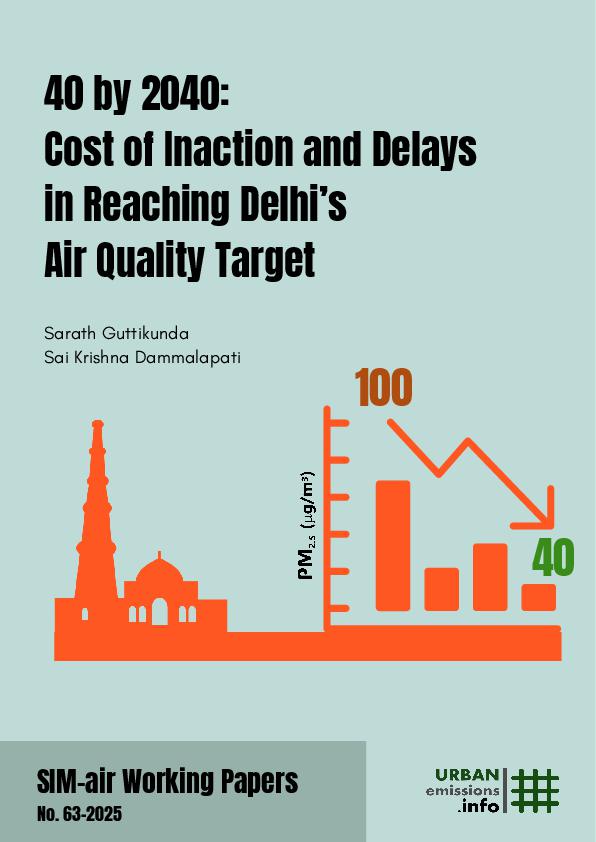
 Click on the image or here to download the full document.
[Citation: https://dx.doi.org/10.2139/ssrn.5867323]
SIM-air No. 63-2025: 40 by 2040: Cost of inaction and delays in reaching Delhi’s air quality target
Summary:
Delhi can improve its PM2.5 concentrations, but it will take at least 10 to 15 years of systematic implementation of a series of interventions, spanning all the sectors, at regional scale. The necessary effort to reach 40 ug/m3 in 2040 is substantial, requiring changes like those seen during the COVID-19 lockdown restrictions, in all the anthropogenic sectors. In addition to the year-round sources, a pathway is required to manage the winter heating emissions and stubble burning emissions, which are the seasonal peaks that contribute significantly to the annual average.
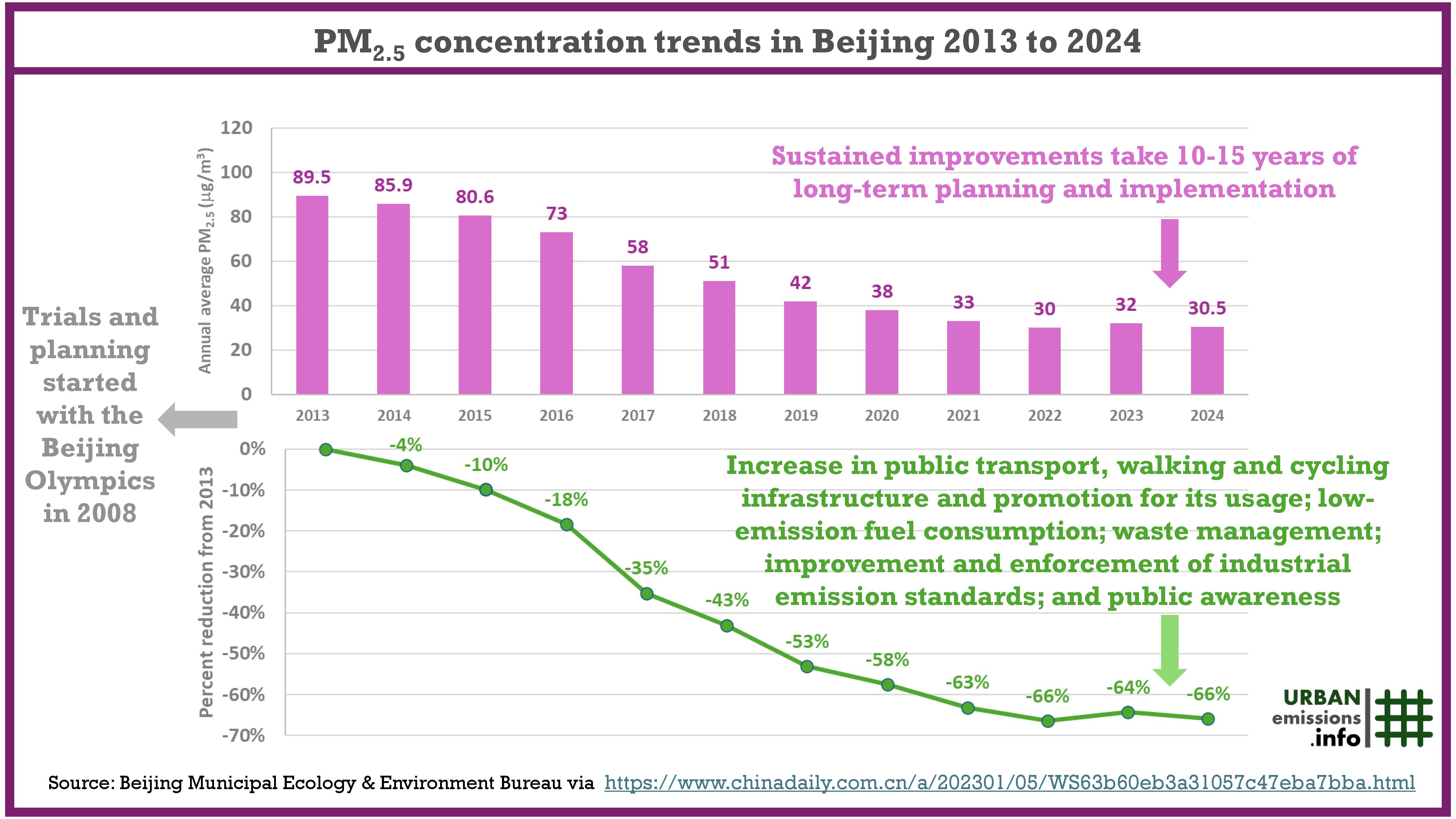
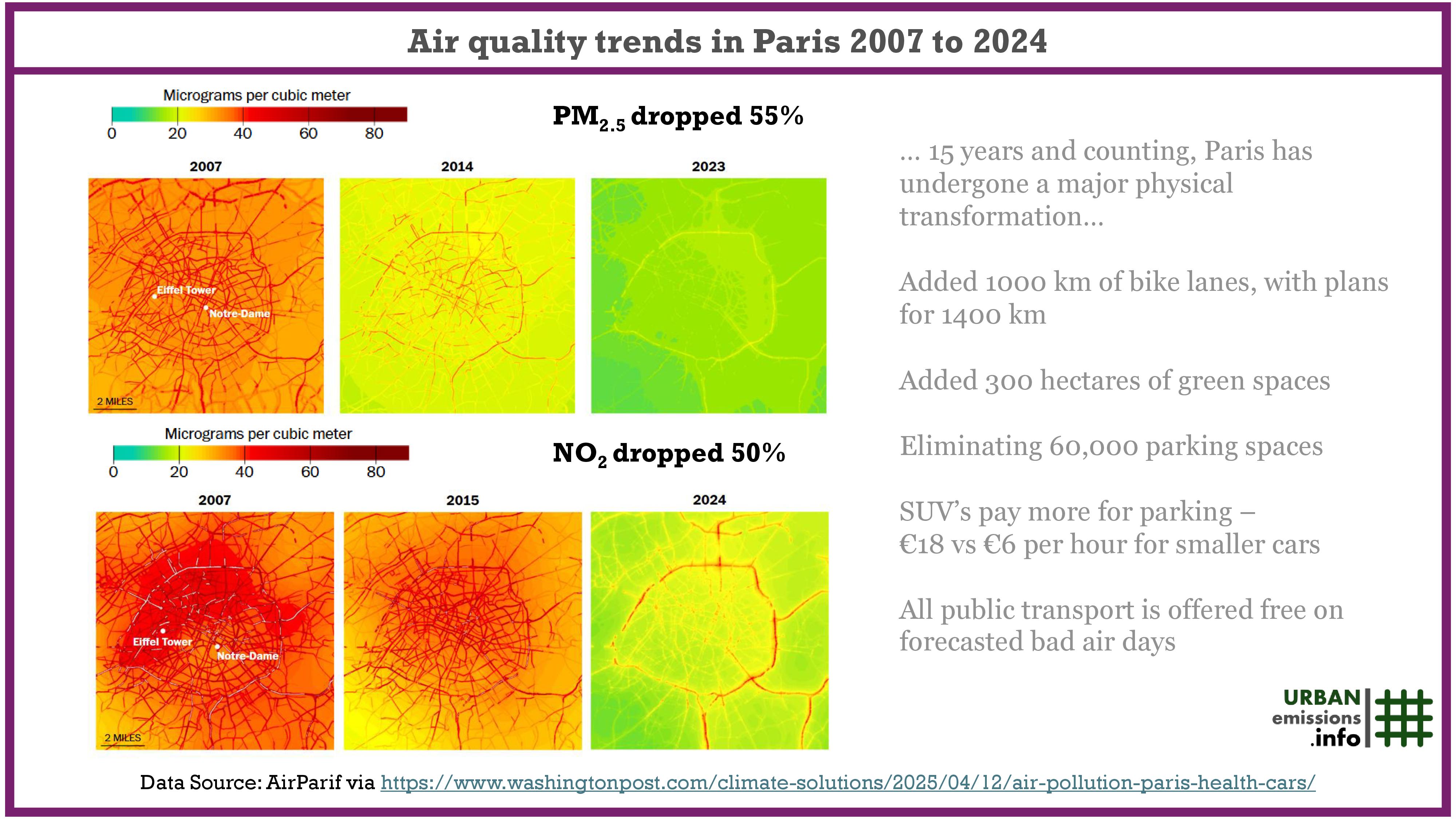
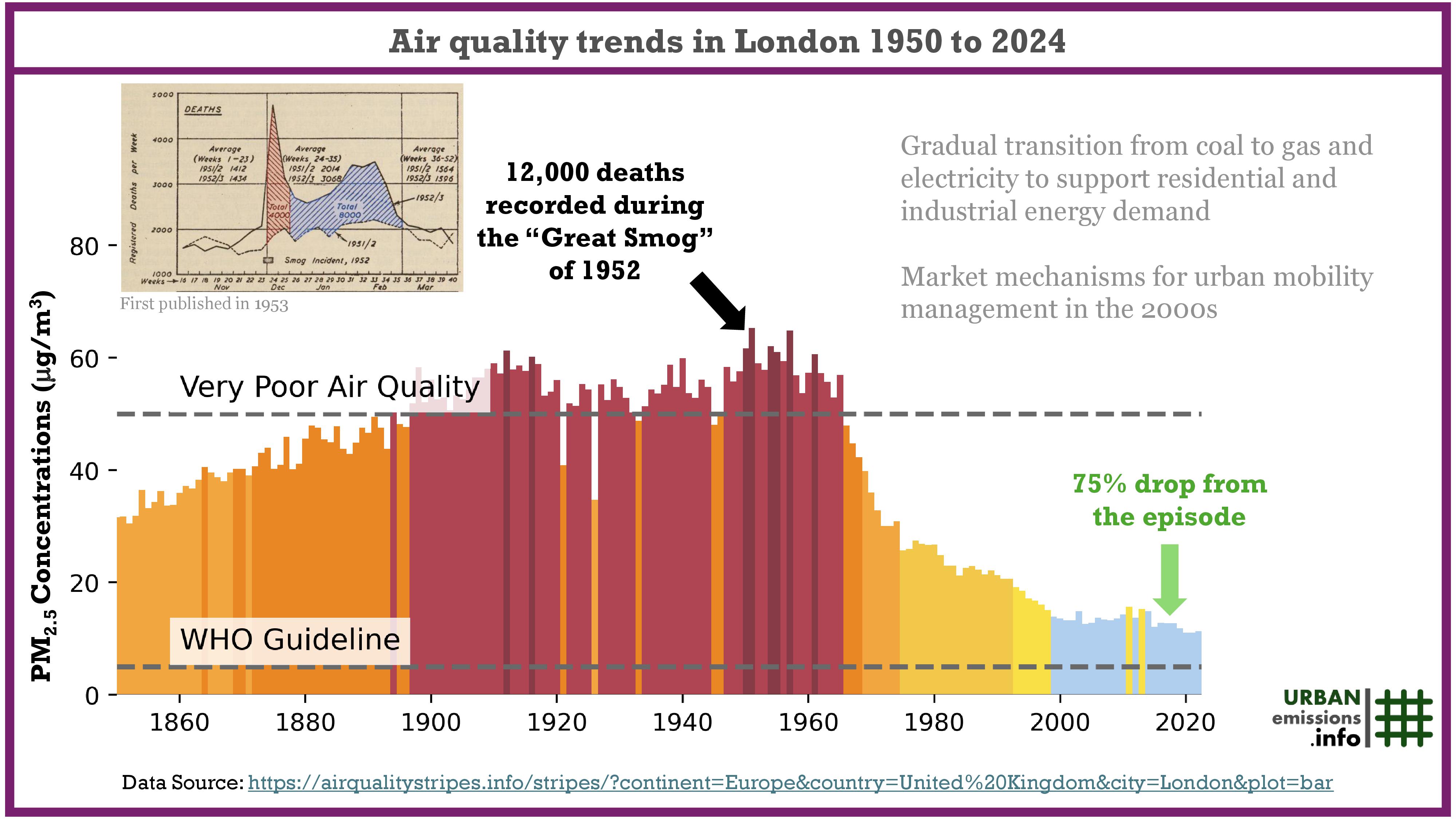
The pathways presented in the paper only aim to have measurable results by the end of 15 years, specifically reaching annual average of 40 ug/m3 for PM2.5 in Delhi. If, by some miracle, these targets are achieved in a much more aggressive manner over the next five or ten years, that would be a bonus. However, given the history of how cities like London, Los Angeles, and Beijing took at least 10 to 15 years to reach cleaner, manageable air quality numbers, it is realistic to assume that Delhi will also take at least 15 years if a cohesive strategy and implementation plan are set into motion in 2026.
Two fundamental questions answered in this paper to address Delhi’s air pollution
- How much reduction is required from various sectors to reach the target (a mathematical solution with a timeline)
- How are these reductions possible in each of these sectors (assigning accountability) along the prescribed timeline.
Table of contents
- Can Delhi’s PM2.5 levels reach 40 ug/m3?
- Delhi’s PM2.5 levels 1989 to 2025
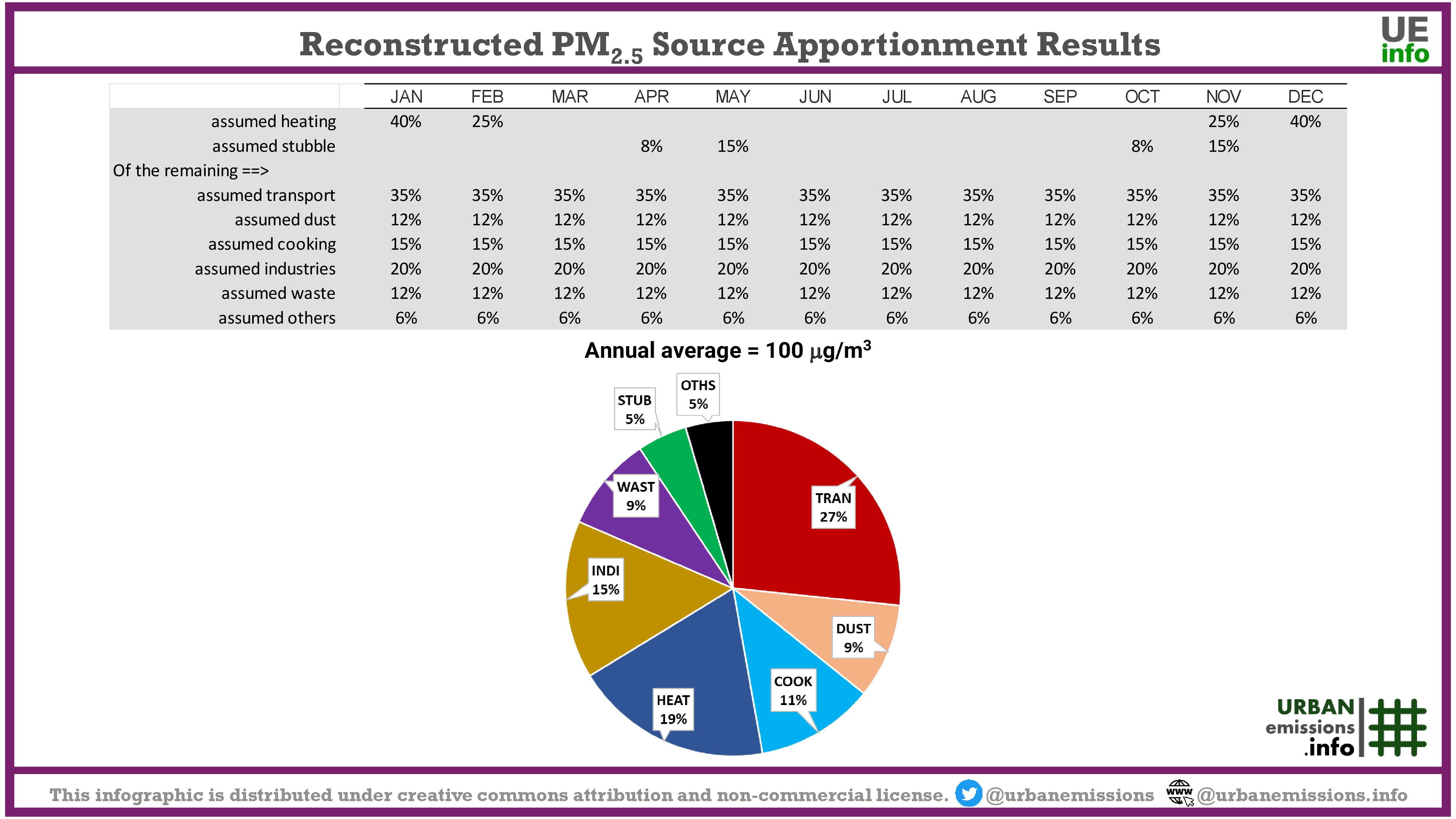
- Source contributions to PM2.5 (2019-2025 average)
- PM2.5 projections 2026 to 2040
- Delhi’s PM2.5 pathways to 40 ug/m3
- Using COVID scenario as basis for reaching 40 ug/m3
- Cost of inaction
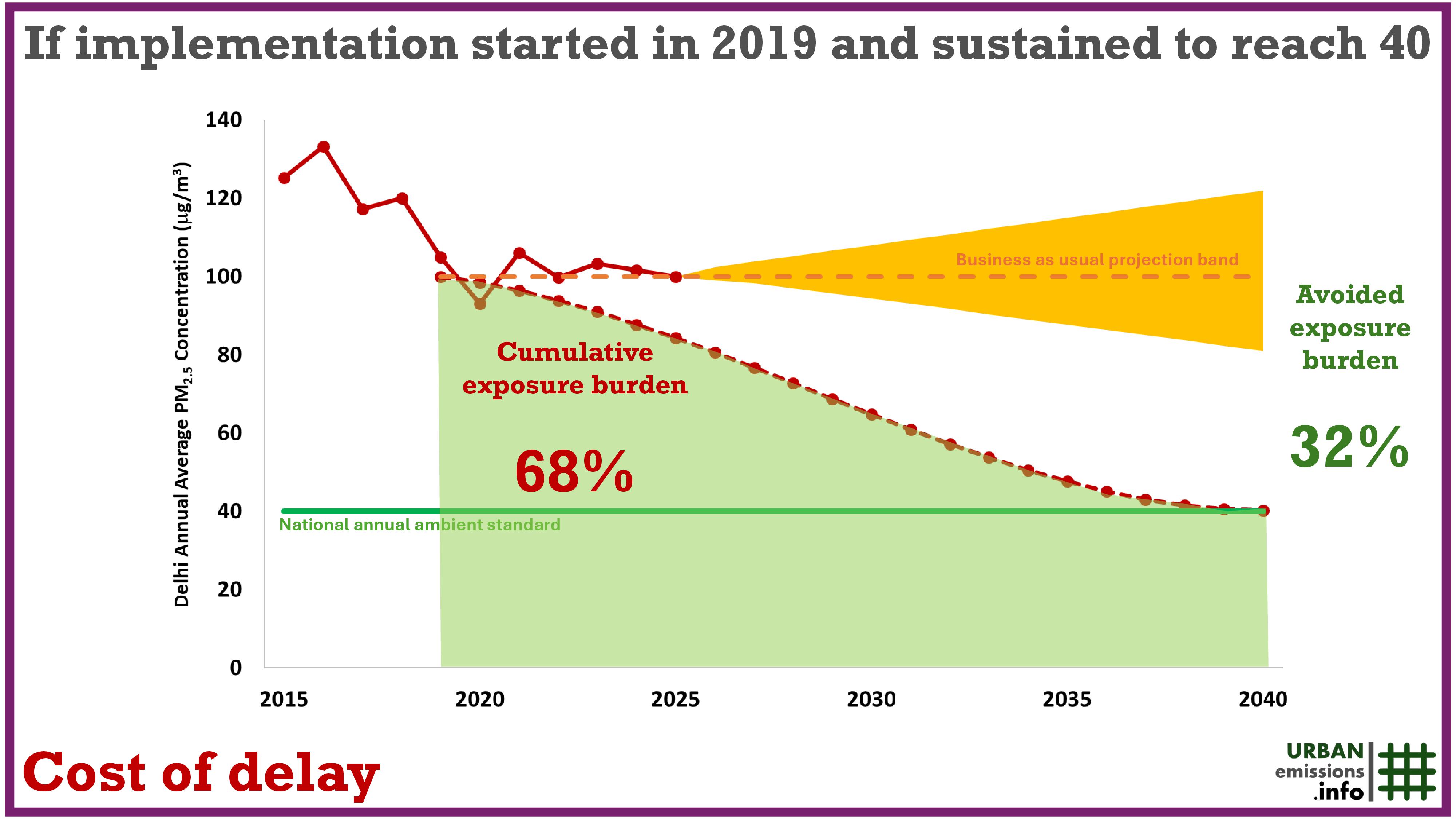
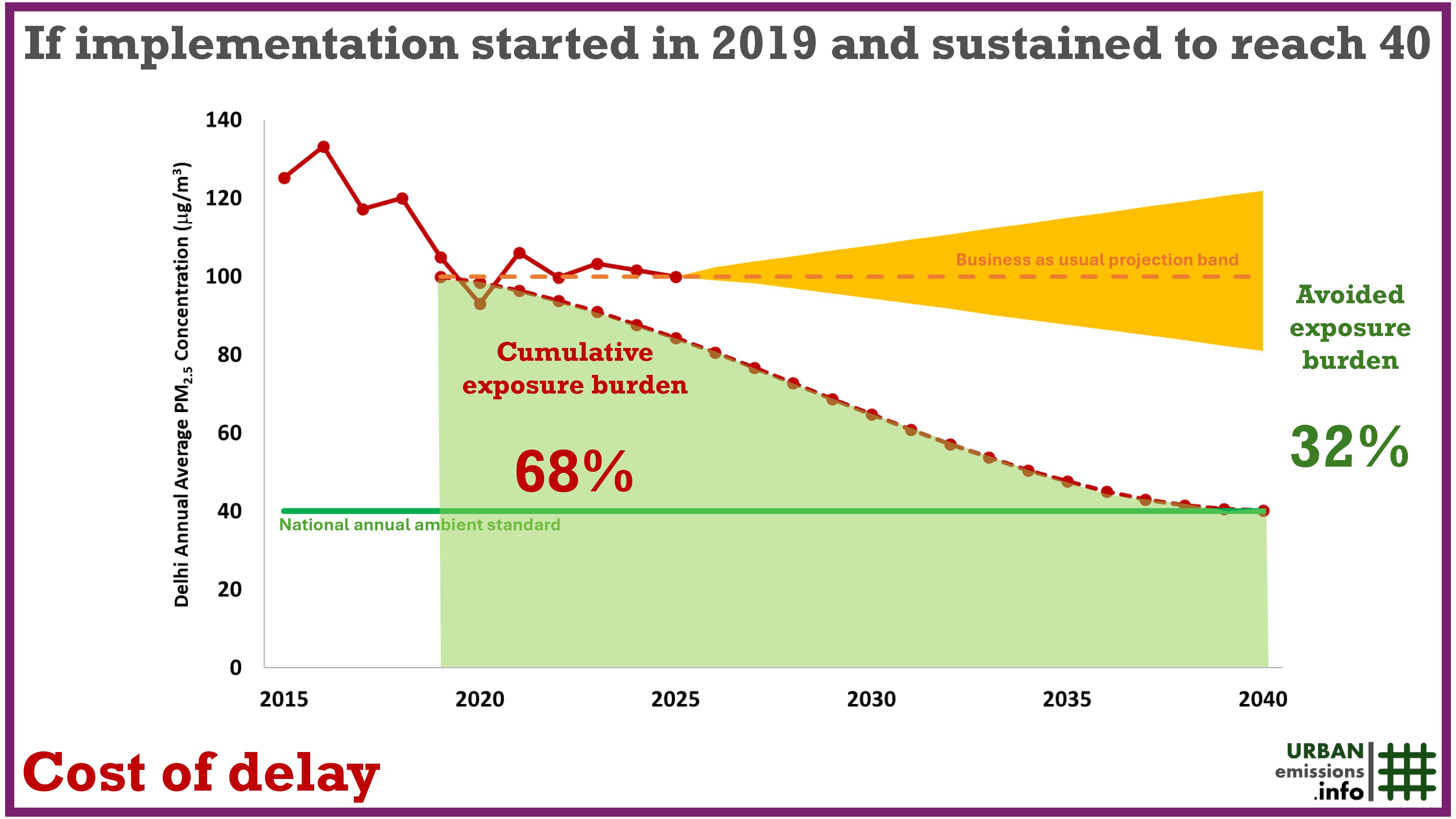
- Cost of delays in implementation
- Additional cost of delays in implementation since NCAP 2019
What Is Polluting Delhi’s Air? A Review from 1990 to 2022
Journal Article in Sustainability (2023) [link]
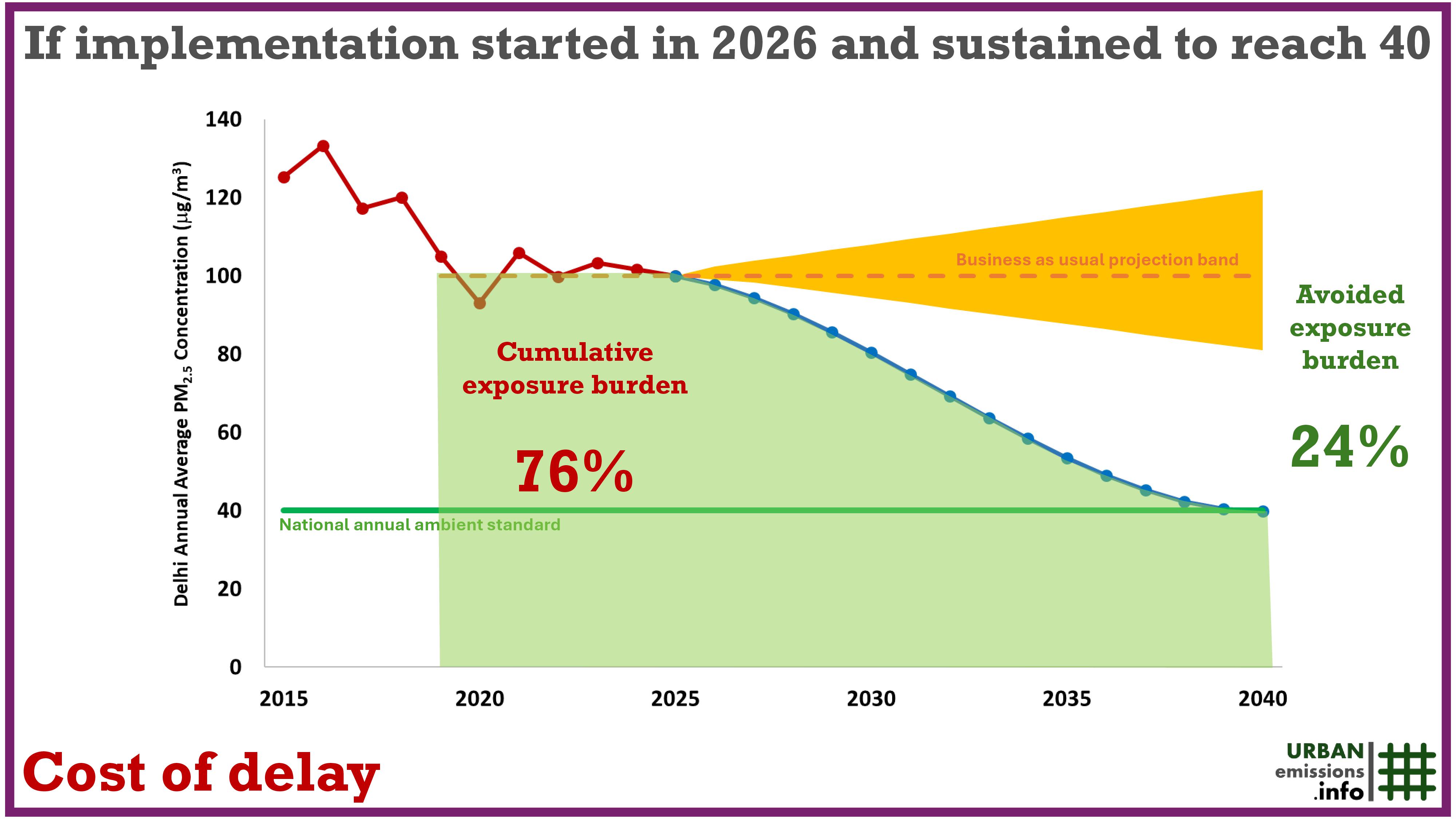
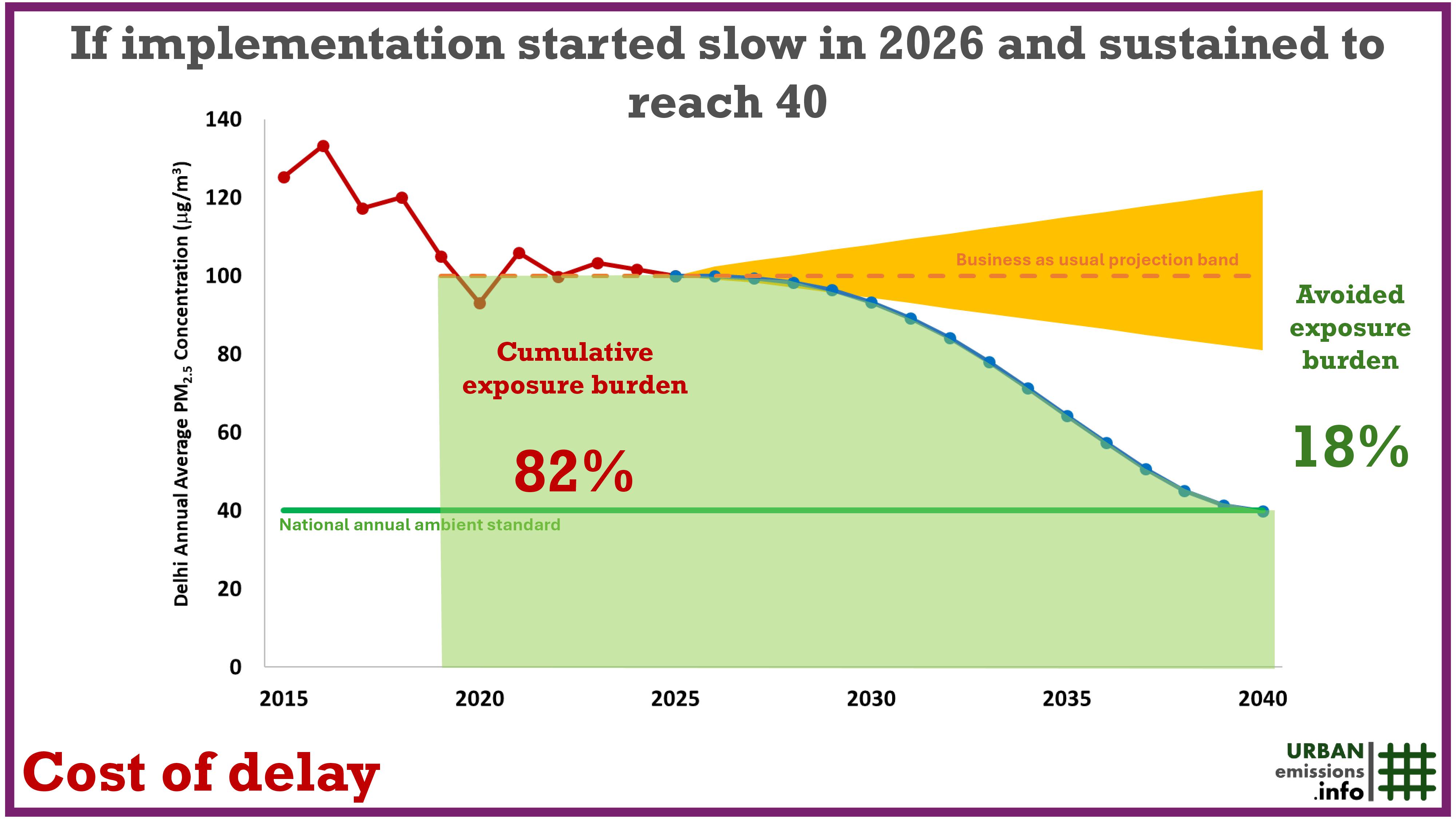
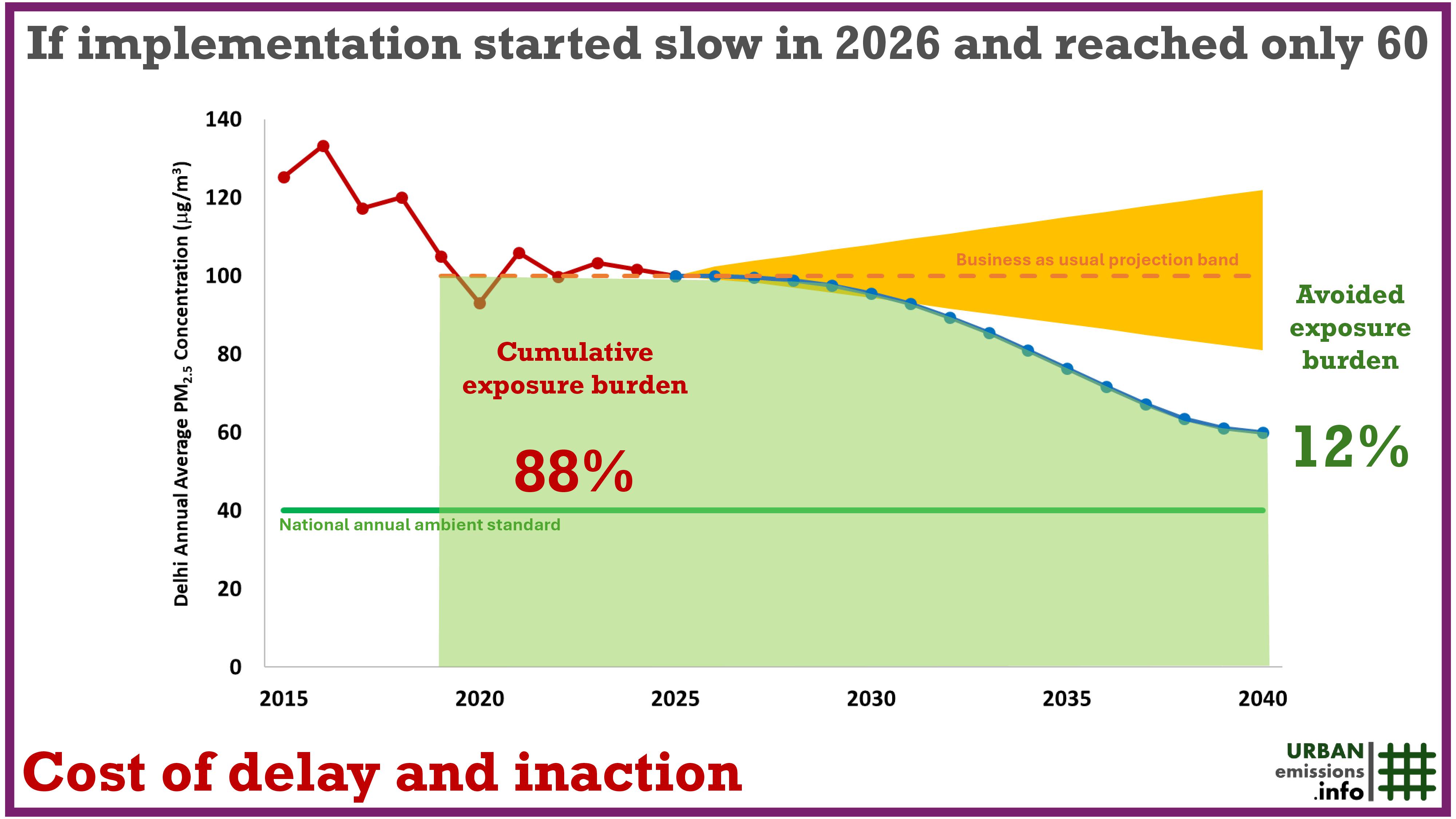
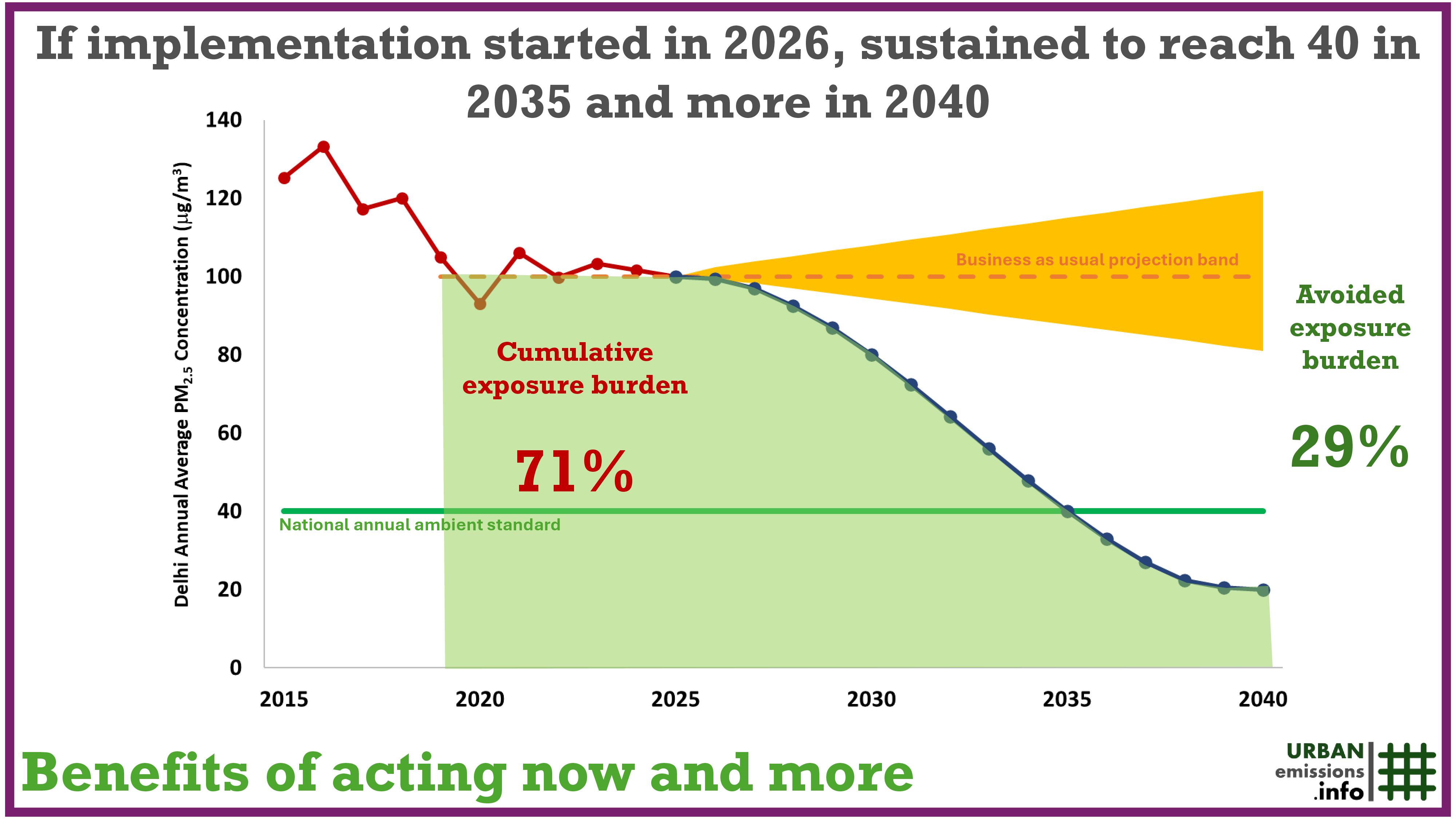
A hypothetical assessment of how Delhi’s annual averages can be 40 ug/m3 by 2040 and what is the cost of inaction and delays. Download the scenario calculator here and a power point file here.
 |
 |
 |
 |
 |
 |
 |
 |
 |
Historical examples of planning and implementation for better air quality.
 |
 |
 |
The methodologies employed in this study are documented under publications. These methodologies explainers are included in our primers, presentations, plug and play tools, benchmarking notes, instructional videos and more, openly available @ https://urbanemissions.info/tools.
Our working papers describe case studies where we applied the SIM-air family of tools, document general notes on emissions and pollution modeling and present our reviews on various topics related to air pollution analysis.